Canada's LTL Freight Specialists
Ship confidently with economy, standard and expedited LTL service.
When you need a reliable LTL freight company in Canada, ShipCanada delivers. Less-than-truckload has always been our specialty: our network includes the largest LTL carriers in Canada and the U.S., which means a broad selection of service and pricing options for every partial shipment — with liftgate service available in most jurisdictions and instant online rates for the majority of Canadian and U.S. postal codes.
What Is LTL Freight — and When Should You Use It?
LTL (less-than-truckload) shipping combines freight from several shippers on a single trailer, so you pay only for the space your shipment occupies. It's the sweet spot between parcel and full truckload: as a rule of thumb, LTL makes sense for shipments of roughly 1 to 6 pallets or 150 to 10,000 lbs. Below that range, a courier is usually cheaper — see our guide to parcel vs. LTL freight. Above it, a full or partial truckload often wins on both price and transit time.
Your LTL freight can travel in one of two ways. Cross-dock consolidation picks up smaller quantities from multiple shippers, consolidates them at a terminal, and reloads them onto connecting line-haul trucks — the most economical option. Direct or expedited LTL keeps your freight on fewer vehicles with fewer or no cross-docks, trading a modest premium for faster, lower-handling transit that approaches truckload speed.
How LTL Pricing Works in Canada
Five factors drive virtually every Canadian LTL rate:
Distance and lane. Rates are lane-specific — a high-volume corridor like Toronto–Montreal prices very differently per kilometre than a rural delivery in northern Saskatchewan.
Weight and density. Domestic Canadian LTL is generally rated on actual weight and dimensions (density). Light-but-bulky freight is charged on dimensional weight, so accurate measurements matter more than most shippers expect.
Freight class (cross-border). Shipments to or from the U.S. are typically rated using NMFC freight classes from 50 to 500 — lower classes cost less. Look up your commodity on our freight class chart before quoting U.S.-bound freight.
Accessorials. Services beyond dock-to-dock — liftgate, residential pickup or delivery, inside delivery, appointment scheduling — each add a fee. Declaring them up front keeps your invoice matching your quote.
Fuel surcharge. A percentage that floats with national diesel prices, applied by all carriers.
Because these variables interact by lane and carrier, the fastest route to an accurate number is an instant quote with your dimensions, weight, and postal codes — it takes about a minute and compares options across our carrier network. For a deeper look at pricing, see our shipping rates guide.
Typical LTL Transit Times in Canada
Transit varies by service level, pickup/delivery locations, and season, but these ranges hold for standard LTL on major lanes:
| Lane | Typical Transit (business days) |
|---|---|
| Toronto – Montreal | 1–2 |
| Toronto – Halifax | 2–4 |
| Toronto – Winnipeg | 3–4 |
| Toronto – Calgary / Edmonton | 4–6 |
| Toronto – Vancouver | 5–7 |
| Montreal – Vancouver | 6–8 |
| Toronto – Chicago (cross-border) | 2–3 |
| Toronto – Los Angeles (cross-border) | 5–7 |
Need it faster? Expedited LTL mirrors truckload transit times on most lanes. Shipping west of Ontario on a budget? Rail intermodal offers the lowest cost for freight that isn't time-sensitive. And for freight that's measured in hours, not days, we offer next-day air freight — call us.
Cross-Border LTL: Canada ↔ USA
Cross-border LTL is our home turf. Shipments between Canada and the U.S. clear customs under PARS (entering Canada) or PAPS (entering the U.S.), coordinated between your carrier and customs broker before the truck reaches the border. ShipCanada monitors clearance on every cross-border shipment, and you can check any broker's clearance status in our PAPS & PARS tracker directory. All you need to provide is a commercial invoice — our logistics coordinators handle the rest. New to importing? Start with how customs works in Canada.
LTL Service Levels We Offer
Economy (consolidated): lowest cost, standard transit via cross-dock network. Standard over-the-road: the everyday balance of price and speed. Expedited LTL: near-truckload transit with minimal handling. Rail intermodal: best economy west of Ontario for flexible timelines. Specialized: temperature-controlled, liftgate, residential, and trade-show freight on request.
LTL Shipping — Frequently Asked Questions
What is LTL freight shipping?
LTL (less-than-truckload) shipping combines freight from multiple shippers on one trailer, so each shipper pays only for the space their freight occupies. It's the most cost-effective option for roughly 1–6 pallets or 150–10,000 lbs — too big for a courier, too small for a full truckload.
How much does LTL shipping cost in Canada?
Rates depend on distance, weight, density or freight class, accessorial services, and the current fuel surcharge. Because pricing is lane- and carrier-specific, an instant online quote with your dimensions, weight, and postal codes is the fastest way to an accurate cost.
How long does LTL shipping take across Canada?
Typically 1–2 business days Toronto–Montreal, 3–4 days Toronto–Winnipeg, 4–6 days Toronto–Calgary, and 5–7 days Toronto–Vancouver. Expedited LTL shortens these to near-truckload times.
Do I need a freight class?
For domestic Canadian LTL, usually not — pricing is by weight and density. For cross-border shipments to or from the U.S., yes: NMFC freight classes apply. Our freight class chart will help you find yours.
Can LTL freight be delivered to a residence or a location without a dock?
Yes — declare liftgate and/or residential service when quoting so the correct equipment is dispatched and your rate is accurate.
Is LTL freight insured?
Carriers include limited standard liability based on weight and freight type — often less than the value of your goods. Full-value cargo insurance can be added at booking. Learn more in our freight insurance guide.
Canada & USA We cover all points
Our network offers daily Service To and From most North American Cities.
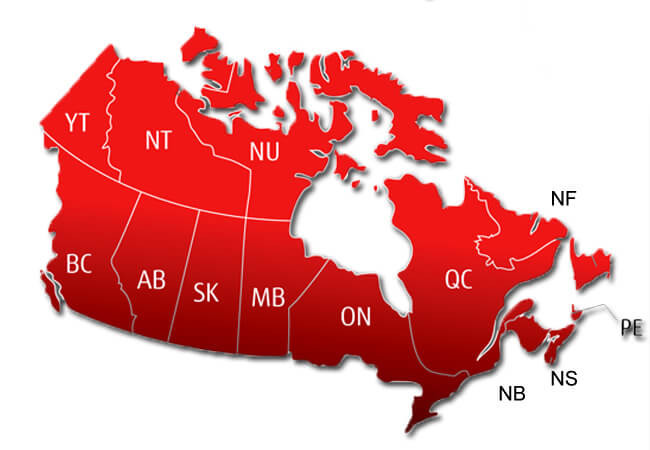
Canada Freight Quotations
Daily Pickup Points
Alberta British Columbia Manitoba New Brunswick Nova Scotia Newfoundland Ontario Quebec Prince Edward Island Saskatchewan
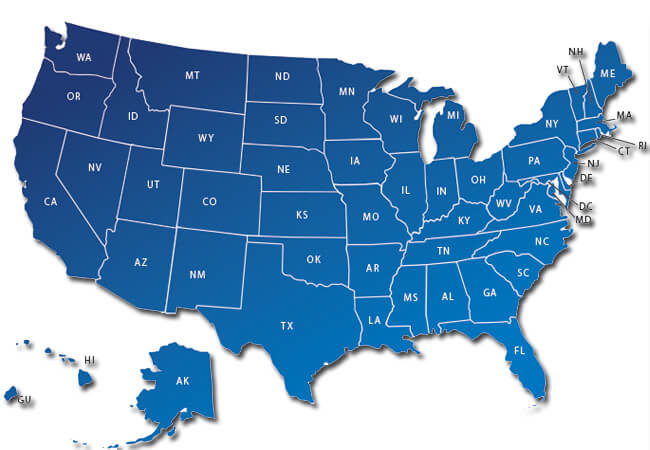
USA Freight Quotations
Daily Pickup Points
Alabama Alaska Arizona Arkansas California Colorado Connecticut Delaware Florida Georgia Idaho Illinois Indiana Iowa Kansas Kentucky Louisiana Maine Maryland Massachusetts Michigan Mississippi Missouri Montana Nebraska Nevada New Hampshire New Jersey New Mexico New York North Carolina North Dakota Ohio Oklahoma Oregon Pennsylvania Rhode Island South Carolina South Dakota Tennessee Utah Vermont Virginia Washington West Virginia Wisconsin Wyoming .
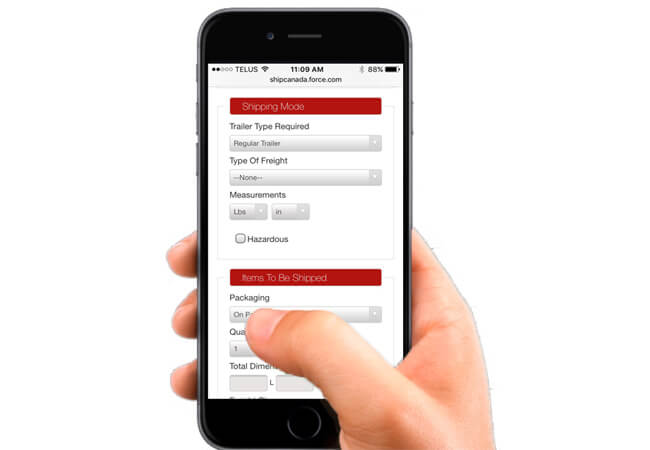
Mobile Quote Technology
Shipping Made Convenient
You can also feel free to visit our online Shipping School for help with terminology and definitions. Our agents are equipped to assist you with all aspects of the shipping process. Once your shipment is in transit you can also track the customs clearance status by visiting our customs portal and locating the appropriate customs broker.
Get A Shipping Quote
Easily ship like a pro! with
Canada's Shipping Company
Let our team manage your shipment from start to finish!
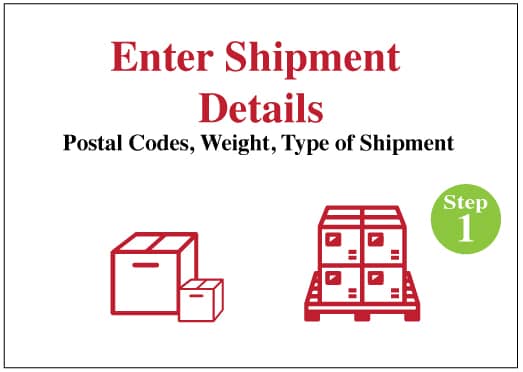
Fast Shipping Quotes
Anywhere within Canada or U.S.A
ShipCanada™ processes more quote requests across more shipping lane combinations than any other Canadian logistics company. Whether you are shipping Parcel , LTL freight, or Flatbed freight....We have you covered!

Easy To Book Your Shipment
Book, Pay & Track from your mobile device.
We know our customers are busy and on the move. ShipCanada makes managing your shipment easy by giving you the ability to manage your shipment on your desktop or mobile device.
We'll Handle The Rest!
We manage your shipment - Start to finish.
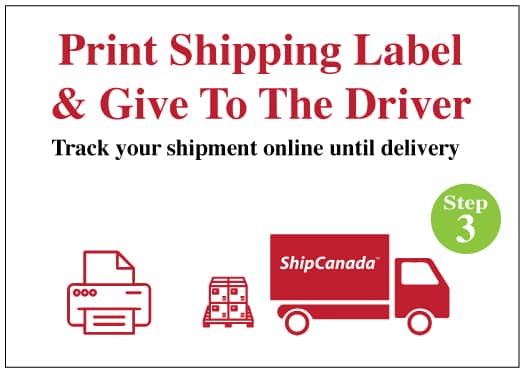
Once you print 3 copies of the shipping label (or bill of lading); affix one to the shipment, give one to the driver upon pickup & keep one for yourself. Once your shipment is in transit your logistics coordinator will provide you with tracking so you can keep an eye on your shipment until final delivery.
Let us make shipping easier.

ShipCanada Inc.
16715 Yonge Street Suite 348
Newmarket, Ontario L3X1X4
Canada